Why The Best Coffee Maker Of 2026 Isn’t What You Think
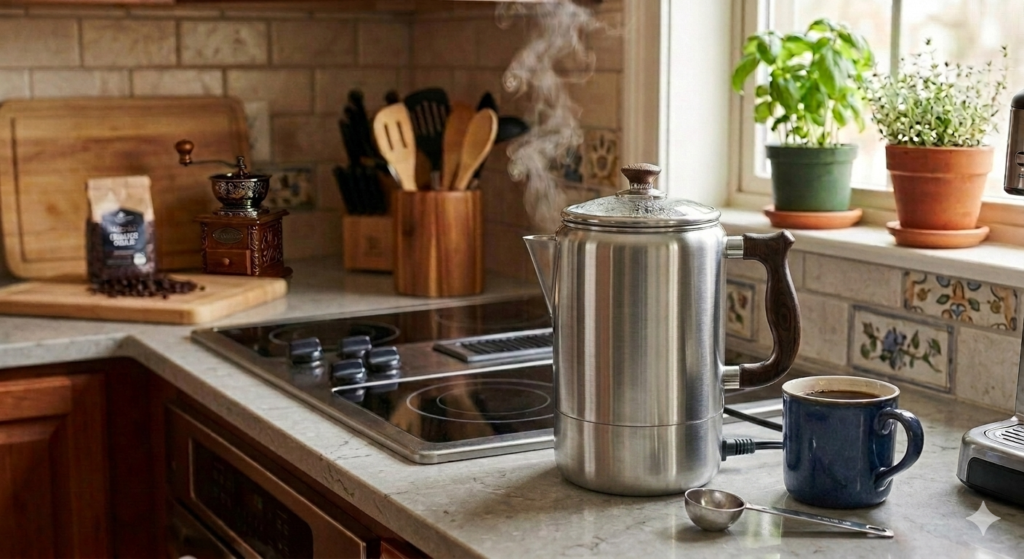
If you’ve only ever used a Keurig or a standard drip machine, a coffee percolator might feel like something from another era. But there’s a reason these old-school brewers still have a loyal following—they do a few things exceptionally well that modern machines often miss.
First, the flavor is noticeably stronger and richer. A percolator continuously cycles boiling water through the coffee grounds, which pulls out more oils and depth than a typical drip machine. The result is a bold, full-bodied cup that doesn’t taste watered down. Compared to a Keurig, which relies on pre-packaged pods, you’re not limited by portion size or pod quality—you control how strong you want your coffee.
Another big advantage is cost and simplicity. With a percolator, you just need coffee grounds and water—no pods, no paper filters (in many cases), and no recurring expenses. Over time, that adds up to real savings compared to a Keurig. Plus, there’s less waste, which is a nice bonus if you’re trying to cut back on single-use plastics.
Percolators are also incredibly durable. There are no complicated electronics or pumps, especially with stovetop models. That makes them reliable and easy to maintain. While a standard drip machine can wear out or a Keurig can clog, a percolator can last for years with minimal upkeep.
Finally, there’s something to be said about the experience. Brewing coffee with a percolator feels a bit more intentional. You can hear it working, smell the coffee as it brews, and dial in the strength exactly how you like it. It turns a routine into more of a ritual.
It’s not that percolators are better in every situation—Keurigs are convenient, and drip machines are quick—but if you care about strong flavor, lower cost, and long-term reliability, a percolator is definitely worth considering.