The History of the Percolator Coffee Maker
The coffee percolator has been an important part of coffee culture for well over a century. Before modern drip machines and single-serve brewers existed, the percolator was one of the most popular ways to make coffee in homes, restaurants, and even campsites across America.
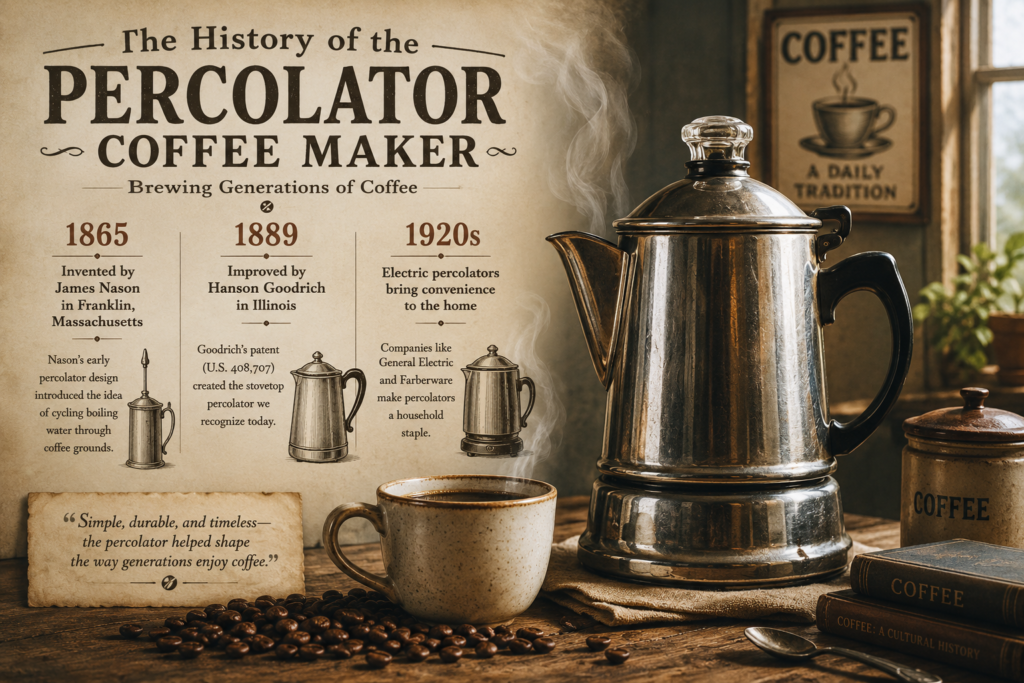
The first modern coffee percolator was invented in 1865 by James Nason, an American inventor from Franklin, Massachusetts. Nason designed the percolator to improve the brewing process by continuously cycling boiling water through coffee grounds. His invention created a stronger and hotter cup of coffee compared to many brewing methods available at the time.
Later, in 1889, a farmer and inventor named Hanson Goodrich from Illinois patented an improved stovetop percolator design that became the foundation for the percolators most people recognize today. Goodrich wanted a more reliable and practical way to brew coffee evenly without constantly stirring or monitoring the pot. His design used a vertical tube and perforated basket that allowed hot water to circulate repeatedly through the coffee grounds.
The percolator quickly became popular because it was simple, durable, and capable of brewing large amounts of coffee. By the early 1900s, percolators were common in American kitchens, especially after electric versions were introduced in the 1920s. Companies like General Electric and Farberware helped turn the percolator into a household staple.
One of the biggest impacts the percolator had on coffee culture was making home brewing more convenient and affordable. Families could easily brew several cups at once, and the strong flavor became associated with traditional American coffee. Percolators also became a symbol of social gatherings, camping trips, and diners.
Even though drip coffee makers and pod systems like Keurig became more popular in recent decades, many coffee lovers still appreciate percolators for their bold flavor, nostalgic feel, and long-lasting design. The invention of the percolator helped shape the way generations of people experienced coffee at home and on the go.